
Marketing in the age of AI
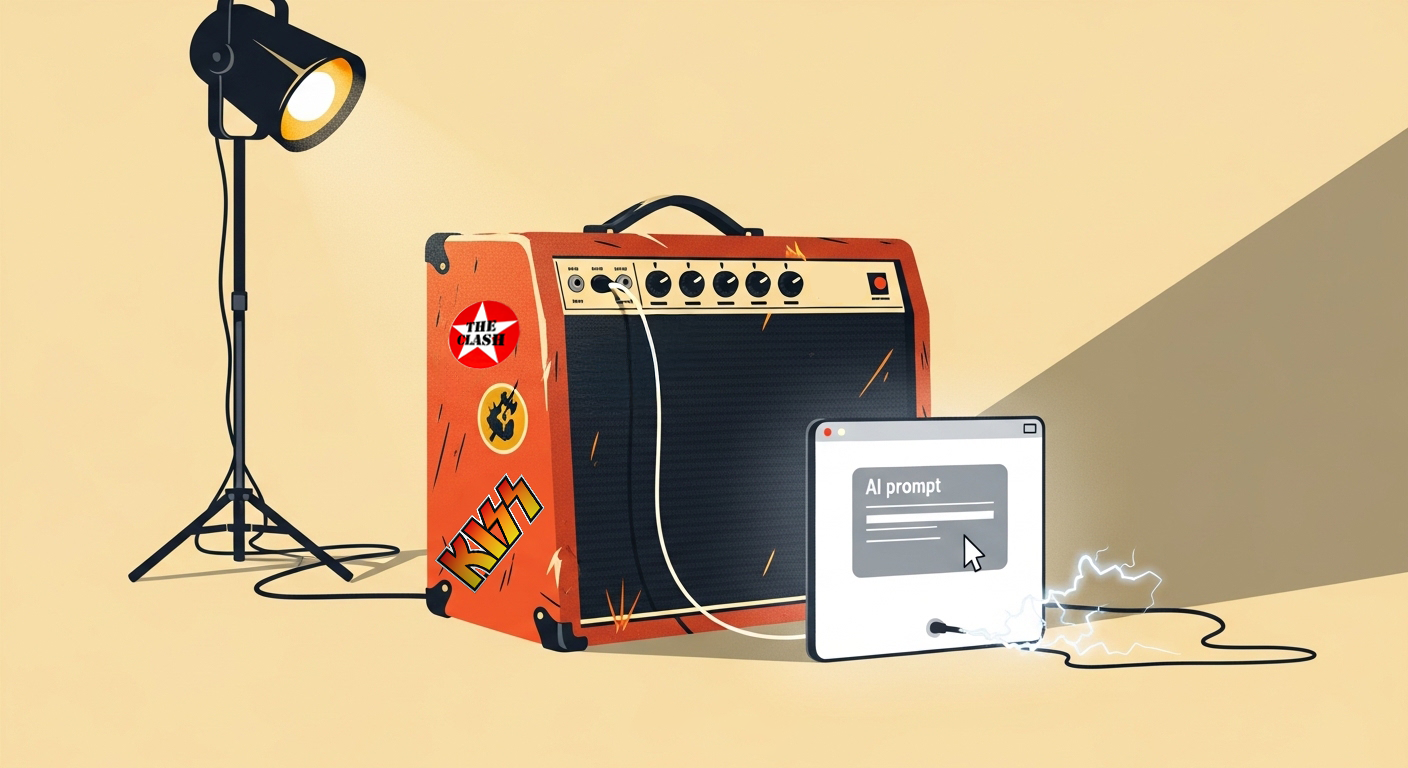
How to ensure AI is the amplifier to your brand, not the author.
The case for real intelligence in an artificial world.
I’ve got a bit of a confession to make. This post, the one you’re reading right now, about why real human thinking and creation still matter in the age of AI, was partly shaped with the help of AI.
A content marketer and visual storyteller for businesses and brands for the past 30+ years, sitting down with Claude to workshop a blog post about how AI can’t replace creativity - yeah, the irony isn’t lost on me.
But here’s the thing. It’s not a contradiction. I used AI the way an architect uses CAD software. It didn’t design the building. It didn’t know what the client needed or what the site demanded. It didn’t know what would make someone stop dead in the street to take a photo. It just made the process faster, so I could spend more time on the part that really matters.
The thinking, instinct and craft.
Drowning in a sea of sameness
I remember the first time I used AI. It felt like a mixture of magic and witchcraft. The speed of answers to prompts was like nothing I’d experienced before.
Before I knew it, I was drowning in a sea of “marketing experts” excitedly telling me how they could create 200 pieces of content from one podcast, with AI outputting it all in a matter of hours, saving thousands on freelancers. But is more necessarily better? The race to the bottom is a fast one when everyone has access to the same tools, running on the same models, trained on the same internet. And if you’re asking AI the same question as everyone else, don’t be surprised when you get the same answer.
Vanilla is delicious, don’t get me wrong, I’m a big fan. But does everyone want to be vanilla? Isn’t chocolate nice on occasion? Or a little cinnamon, a smidge of ginger? What’s unique to you is your “you-ness”. Your brand, your story, your people, your clients, your products. Variety is the spice of life, and authentic brand content is now more important than ever.
Would you put your brand in the hands of a machine designed to churn out content faster than you can hum the opening bars to Kraftwerk’s “Computer Love”?
I get the appeal. Truly. Faster, cheaper, always available. AI is the intern who never sleeps, never takes a sickie, and never complains about you playing retro German electronic bands loudly in the office.
But convenience over craft has a habit of catching up with you. When your content sounds like everyone else’s, when your brand voice gets lost in the volume, when your audience starts scrolling past without stopping, that’s not a tool problem. That’s a thinking problem, and it has a funny way of coming back to bite you in your bytes.
Keeping it Real
While some are embracing AI in its entirety, like the creators of fictional “actress” Tilly Norwood, to the outrage of much of the internet, there are those who see the worth of reality and are actively celebrating it.
Pamela Anderson has spent recent years stripping back the heavily made-up, front-page persona of the 90s to embrace her natural beauty with zero apology. Which is exactly why American fashion brand Aerie saw her as the perfect partner to double down on their commitment to keeping AI out of their marketing entirely.
The campaign is worth watching. Anderson sits at an AI interface, prompting the system to generate models and make them happier, more natural, less lifeless. Nothing lands. Nothing feels human. Increasingly frustrated, she demands: “make them feel real”, and the artificial scene dissolves, cutting to a real Aerie shoot full of laughter, movement and actual energy. Anderson turns to the camera and delivers the billboard-worthy line: “You can’t prompt this.”
The tagline is just as good: “Real matters.” Two words that couldn’t mean more right now.
Aerie isn’t alone. Dove has been championing real bodies and real people for years, and their anti-AI stance earned them a Cannes Lions Grand Prix. These aren’t fringe decisions. They’re commercial strategies.
In a world where real and generated are becoming increasingly hard to tell apart, something authentic cuts through. Aerie saw a 23% jump in sales, a result they attribute directly to building consumer trust through authenticity.
Authenticity isn’t soft; it’s a competitive advantage.
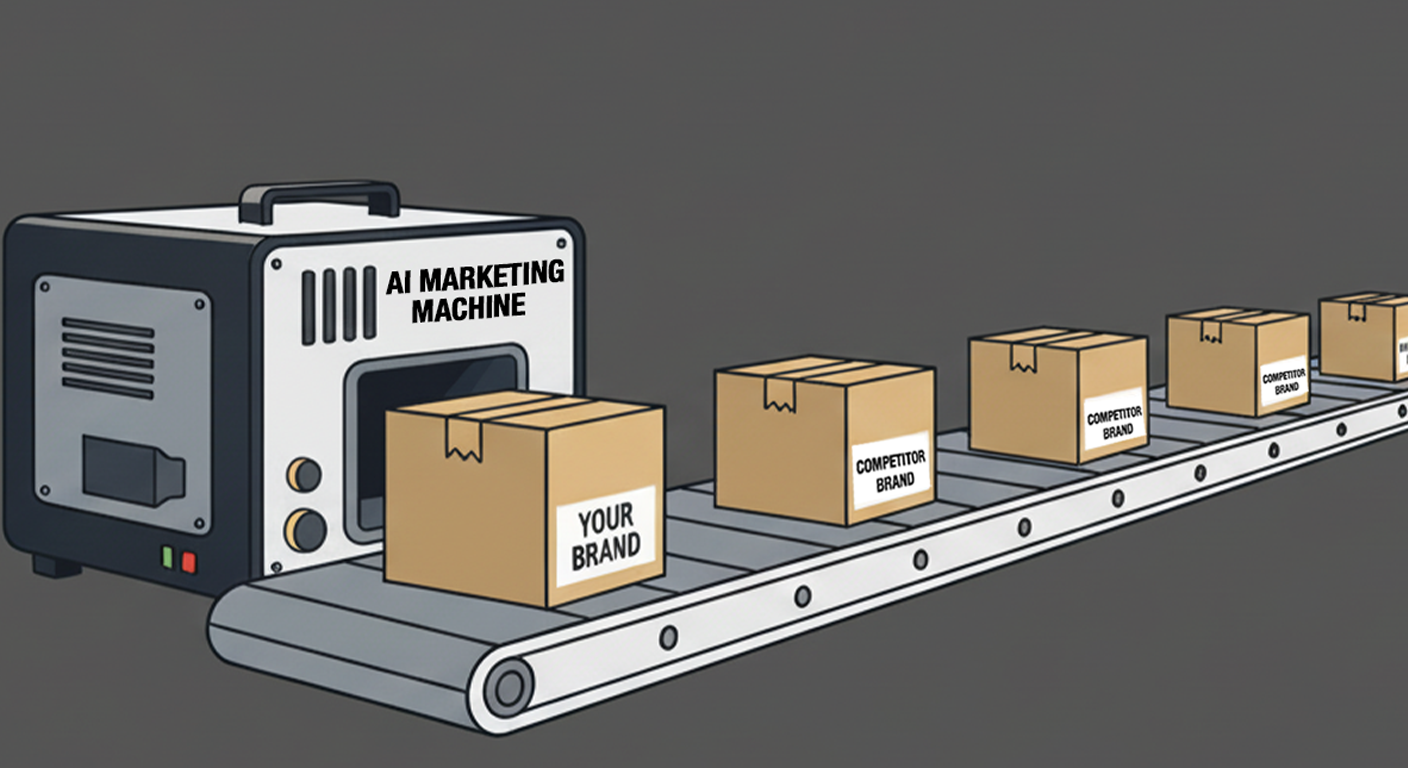
Rinse and repeat. Putting in the same prompts and expecting a different result is a sign of madness.
Same Tools. Same Prompts. Same Problem.
Here’s the scenario. You’re a founder selling a skincare range. You use AI to create your content strategy, write your social posts, your blogs, your campaigns, and it churns them out often and efficiently.
But here’s the question you should be asking yourself: if your competitor is using the same AI tools as you, feeding the same prompts to an LLM trained on the same data what’s left that’s actually yours?
The answer is everything that lives outside the prompt box.
Your brand story and brand voice. Your team’s expertise. Your values and point of view. Your customer relationships, the ones built on trust, not transactions. And ultimately, your product and what makes it genuinely different.
None of that can be generated. It can only be expressed by people who actually know you. And right now, that’s the rarest thing in marketing.
Embracing RI in an AI-Powered World
I spend a lot of my professional life listening. That’s not to say I don’t listen to my whānau at home, although on occasion, I do switch off, TBH. But when I meet with clients, I’m often discussing the challenges they’re facing, the wins they’ve made, or an exciting new product launch.
Outside of the Q&A, there is always a moment where my client says something offhand. A phrase, an insight, a frustration, a value, something they don’t even flag as important. But it resonates like a mic drop to me. It lands. And that landing is the difference between content that describes a business and content that is the business.
You can’t prompt this moment into existence. It emerges from a real conversation between people, with someone who is actually listening and paying attention. That’s RI - Real Intelligence. Human instinct, accumulated experience, genuine curiosity and the ability to pick out those golden nuggets that happen in passing.
It’s after these moments that the real magic happens, and it happens alongside AI. I’ve built my own marketing assistants inside Claude, one for Neat Trick Productions and one for each of my clients. My AI doesn’t just know me. It knows my clients. Their campaigns, their brand voice, their wins, their language, the article we wrote six months ago and the campaign we’re planning for next quarter. It’s the most well-briefed creative partner I’ve ever had, and it still needs me to know what to do with what it gives me. That’s not a shortcut. That’s a system built on Real Intelligence first, with AI doing what it does best behind it. And together, we are doing some pretty amazing things.
I’m not an AI hater. On the contrary, I believe AI makes me think deeper. It’s my partner in creative crime, takes all my ideas and helps me hone them into well-formed, effective marketing content. But AI tools power the process. It’s Real Intelligence that guides every decision I make. Like a DSLR, Adobe, Canva, or a great piece of music, AI is a fantastic tool to help you develop original, real content. But it shouldn’t be the sole creator.
AI is the amplifier, not the author.
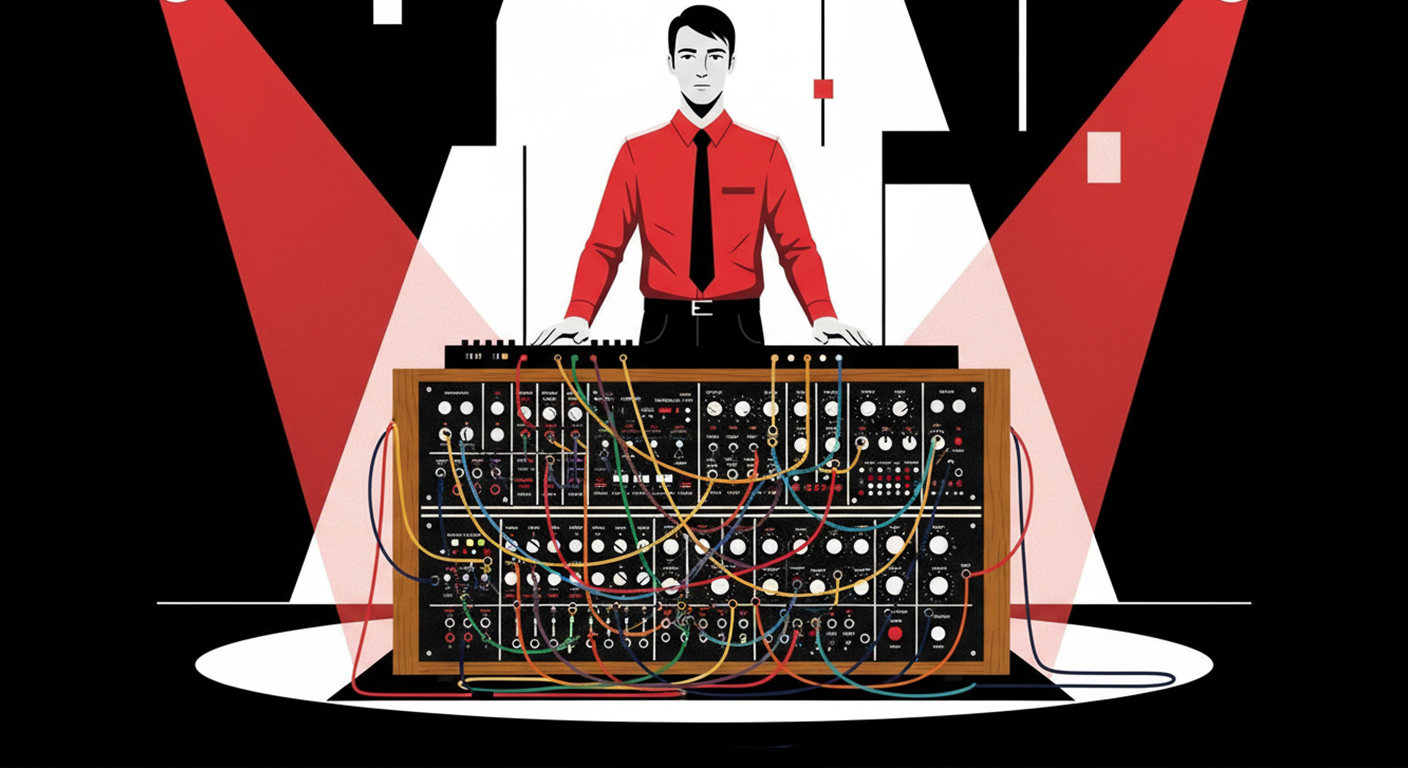
The synth doesn't make the music. The musician does. The same goes for AI.
The Case for RI - Real Intelligence
So here’s where we land. AI didn’t write this conclusion (although we may have workshopped a bit). It didn’t know why I wanted to write this blog post about RI, or which line would make you pause, or if you even knew who Kraftwerk were. Have a listen, they are fab.
That was RI. And it’s available to your brand too.
If you’re trying to work out how you and your business can cut through all the AI noise, or you just want a conversation with someone who’s been in this industry long enough to have used a fax machine professionally, I’d love to hear from you.